

Orthognathic Surgery – Katy, TX
Correct Serious Bite Problems & Improve Your Health
The function of your upper and lower jaws plays a critical role in your oral function and your overall wellness. If you have severe dental misalignment that cannot be addressed via orthodontic care alone, you might need to undergo orthognathic surgery, which is also known as corrective jaw surgery. Our highly skilled surgical team in Katy is ready to assist you with this potentially life-changing service. Continue reading below to learn more, or contact us directly to request a consultation.
Orthognathic Surgery: An Introduction
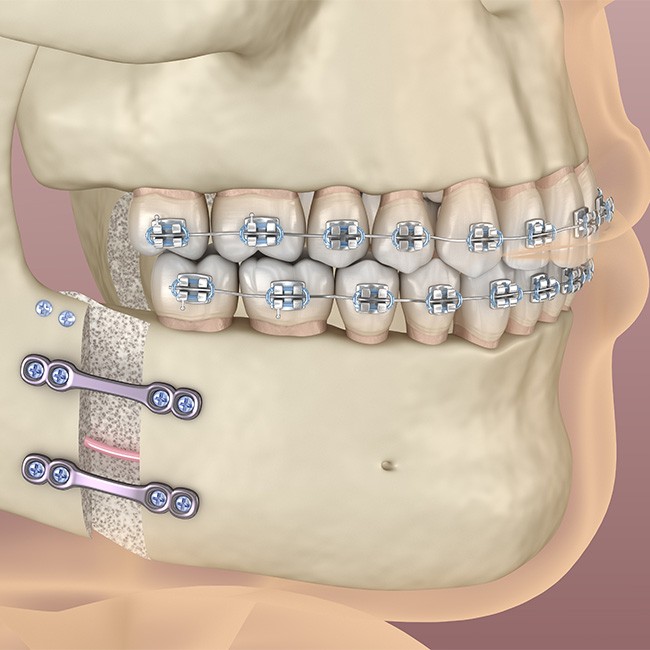
Orthognathic surgery is a specialized procedure designed to address significant jaw misalignment. During it, we carefully reposition bone segments and hold them in place with the help of tiny titanium screws and plates. Orthognathic surgery is often used to:
- Correct severe overbites, underbites, or crossbites that impact daily life.
- Improve your facial symmetry and appearance.
- Alleviate discomfort caused by jaw joint disorders or sleep apnea.
- Enhance your ability to chew, speak, and breathe more comfortably.
Orthognathic surgery is recommended in certain situations where orthodontic treatment alone would not be adequate to address severe alignment problems. This procedure works alongside orthodontic care to produce the best possible results, so you can expect our team to coordinate closely with your orthodontist.
Do You Need Corrective Jaw Surgery?

Corrective jaw surgery might be necessary for you if you experience:
- Chronic jaw pain or persistent headaches linked to jaw alignment issues.
- Difficulty biting, chewing, or swallowing food.
- Noticeable facial imbalance or asymmetry.
- Excessive wear on your teeth due to an improper bite.
- Obstructed breathing during sleep, often resulting in sleep apnea.
You should schedule a thorough evaluation with your orthodontist and our team. We can thoroughly evaluate the situation and recommend your next steps.
What to Expect with Orthognathic Surgery

Orthognathic surgery can feel like a big undertaking. Indeed, the entire process (including the surgery and necessary orthodontic care before and afterward) can stretch out over the course of a couple of years in some cases. Here is an overview of how the process typically works:
- Pre-surgical orthodontic treatment may be required.
- During surgery, our team will reposition your jawbone to achieve the desired alignment. We may work on the upper jaw, lower jaw, or in some cases, both. Usually, the procedure takes a few hours.
- We will use anesthesia and sedation to keep you comfortable throughout the surgical process.
- You may need to stay in the hospital for a day or two during the first part of your recovery.
- After surgery, a period of healing is essential. You may need to follow a soft-food diet and attend follow-up visits. Our team will provide detailed instructions with the goal of helping you enjoy a successful and complication-free post-op period.
- Physical therapy, jaw exercises, and additional orthodontic treatment may be recommended to restore full function.
Orthognathic Surgery FAQs
Does Dental or Medical Insurance Cover Orthognathic Surgery?
In many cases, medical insurance covers orthognathic surgery if it is deemed medically necessary. For example, approval may be given if you have a severe overbite or underbite, or your jaw’s misalignment is interfering with proper speaking and breathing.
Dental insurance might cover a portion of the orthodontic treatment that is often necessary before and after orthognathic surgery.
Our Katy oral surgery team welcomes both medical and dental insurance. We can assist with things like preauthorization, filing claims, and more. Simply provide your policy information, and we will see what we can do to help you reduce your out-of-pocket costs.
What Are the Three Main Types of Corrective Jaw Surgery?
While every orthognathic surgery is unique in its specific details, there are three main types of procedures that fall into this category:
- Maxilla surgery (maxillary osteotomy): This focuses on repositioning the upper jaw.
- Mandible surgery (mandibular osteotomy): The goal of this surgery is to correct abnormalities in the lower jaw.
- Double jaw surgery (bimaxillary osteotomy): Some patients require surgery on both their upper and lower jaws in order to achieve the best possible results.
During your consultation, our team can discuss the details of your recommended procedure so you understand the road ahead.
Does Orthognathic Surgery Leave Any Visible Scars?
Orthognathic surgery is usually performed by accessing the jawbone via incisions in the gums. Without any exterior incisions, you do not need to worry that the surgery will leave any readily noticeable scars. In fact, any aesthetic impact it has should ultimately be positive! The only scars you may notice will be thin white lines on your gums.
Is There Any Way to Prevent the Need for Orthognathic Surgery?
In some cases, the need for corrective jaw surgery can be prevented via early orthodontic treatment. That is why all kids should have an orthodontic evaluation before they turn 7 years old. Special devices can be used to guide the growth of the jaws and prevent the need for more extensive care in the future.
Surgery is often needed for adults who did not receive early orthodontic treatment, as well as those who suffered traumatic facial injuries.
How Long Is the Recovery Process After Orthognathic Surgery?
Orthognathic surgery is pretty major, so you will need to be patient as your body heals. Most people take 3 – 4 weeks off of work or school for the initial healing period. Most of the swelling and discomfort subsides within 2 – 3 weeks. You should be feeling almost normal by 6 – 8 weeks, though complete healing of the bone can require 9 – 12 months. Our team will work with you and your orthodontist to facilitate a smooth recovery and successful outcome.